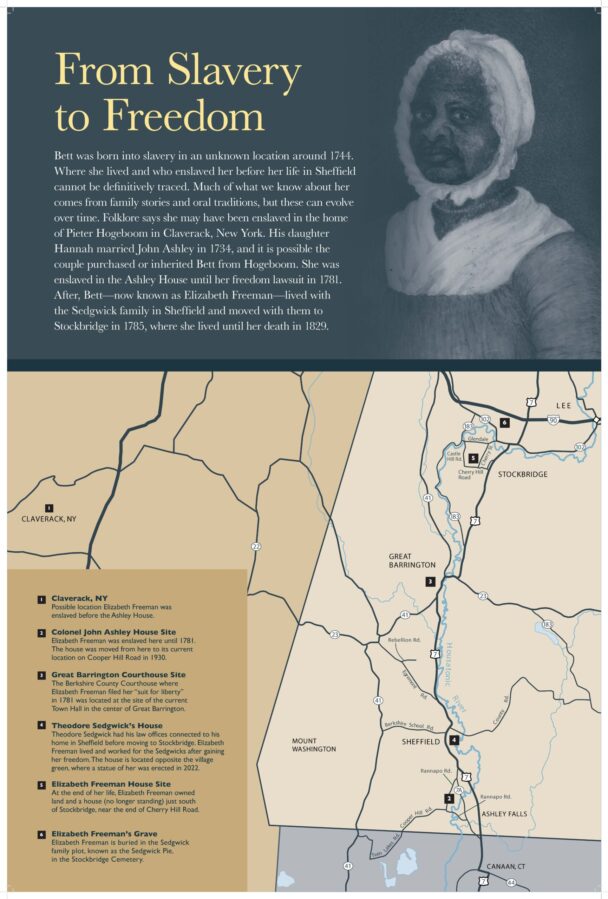
Today Elizabeth Freeman is widely hailed as a changemaker who helped end slavery in Massachusetts, but many details of her life are unknown.
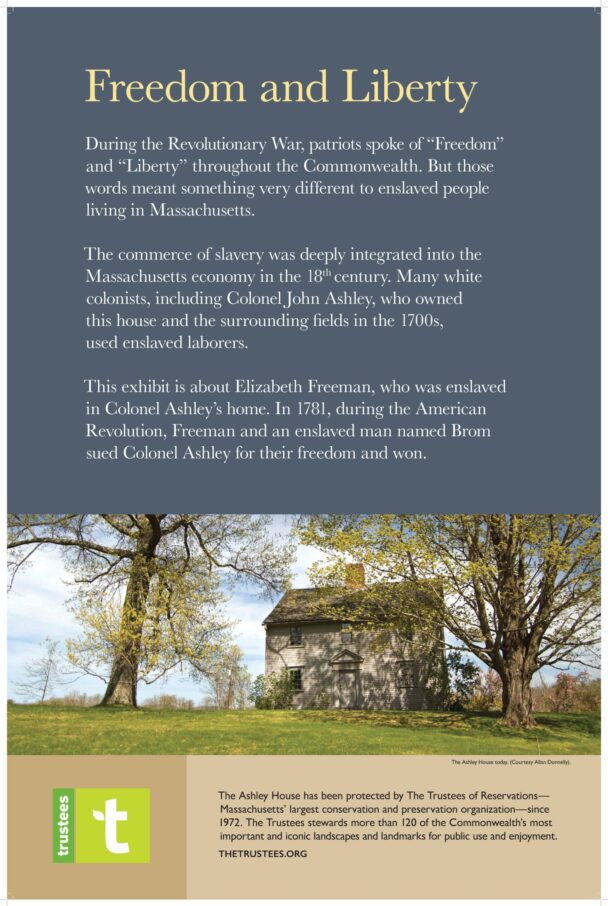
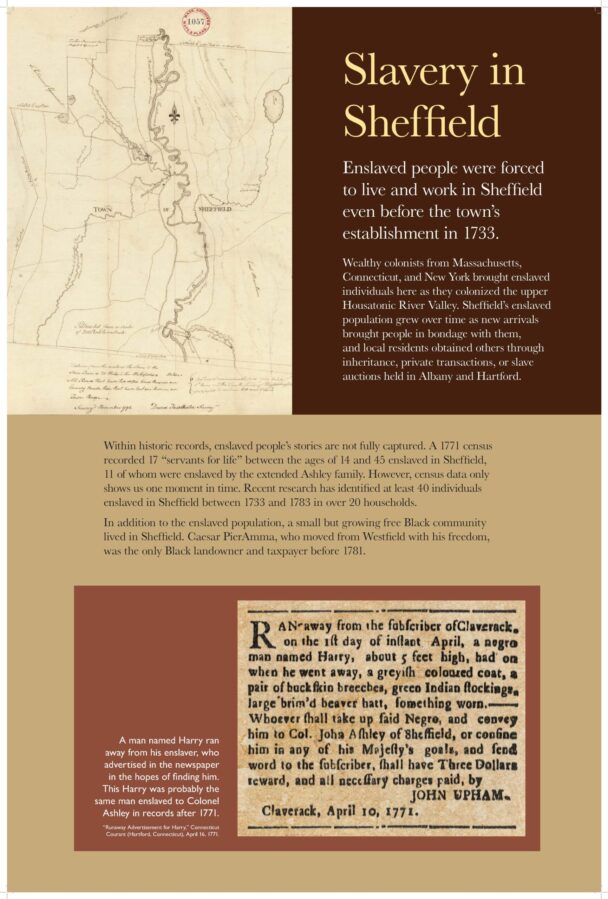
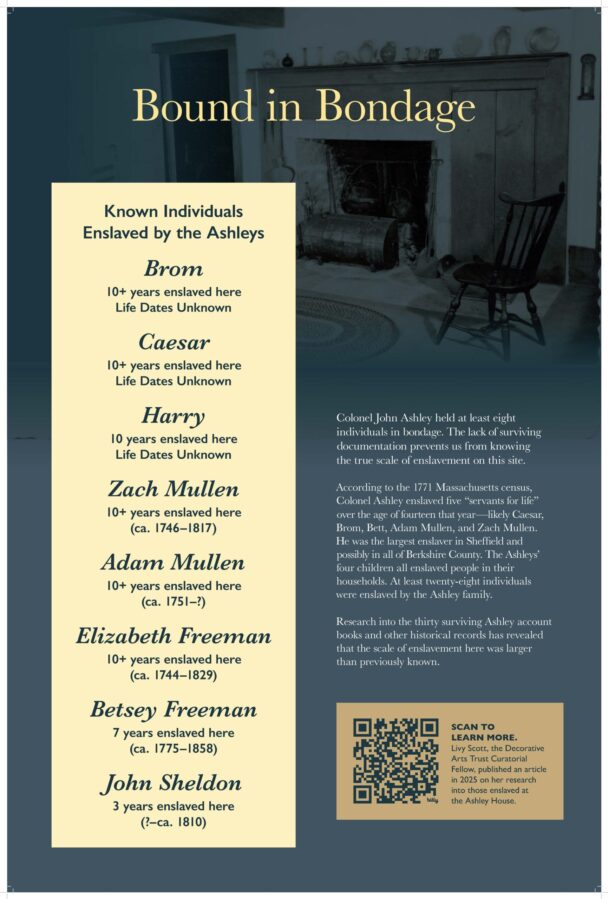
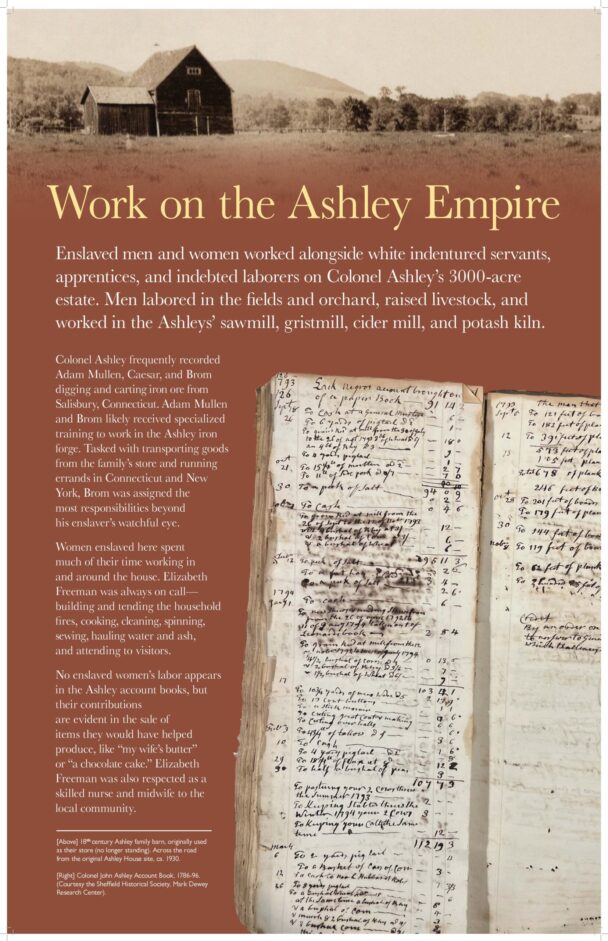
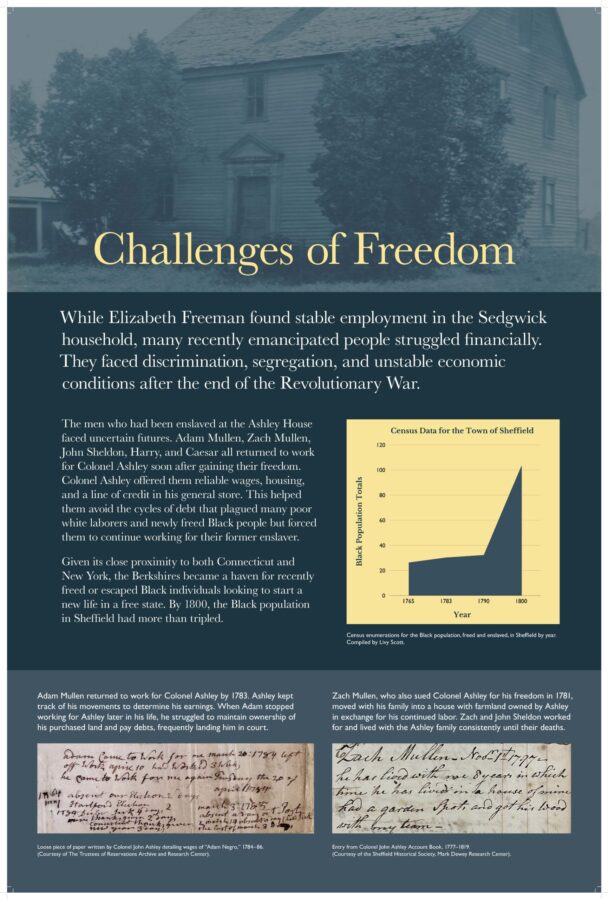
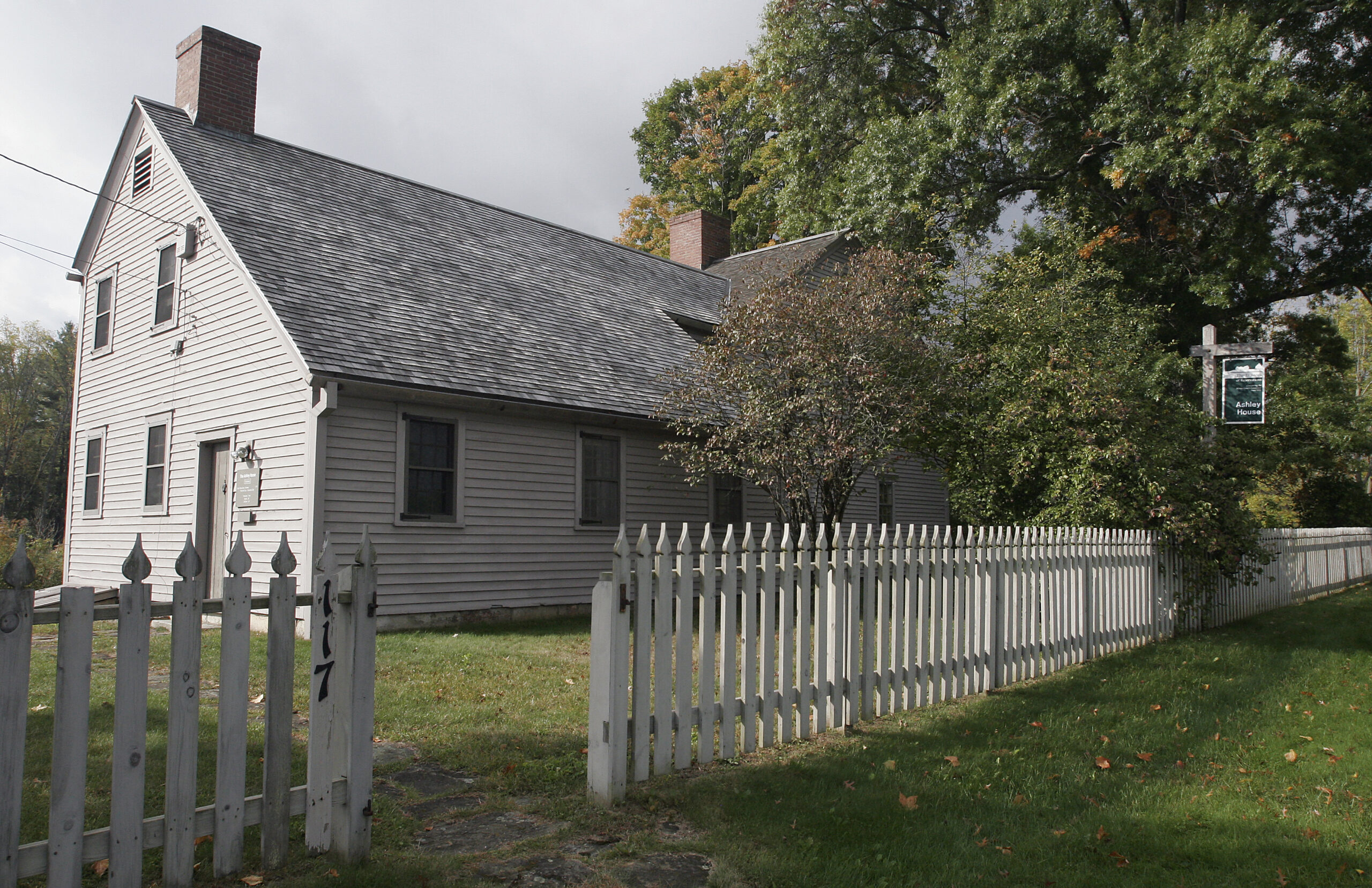
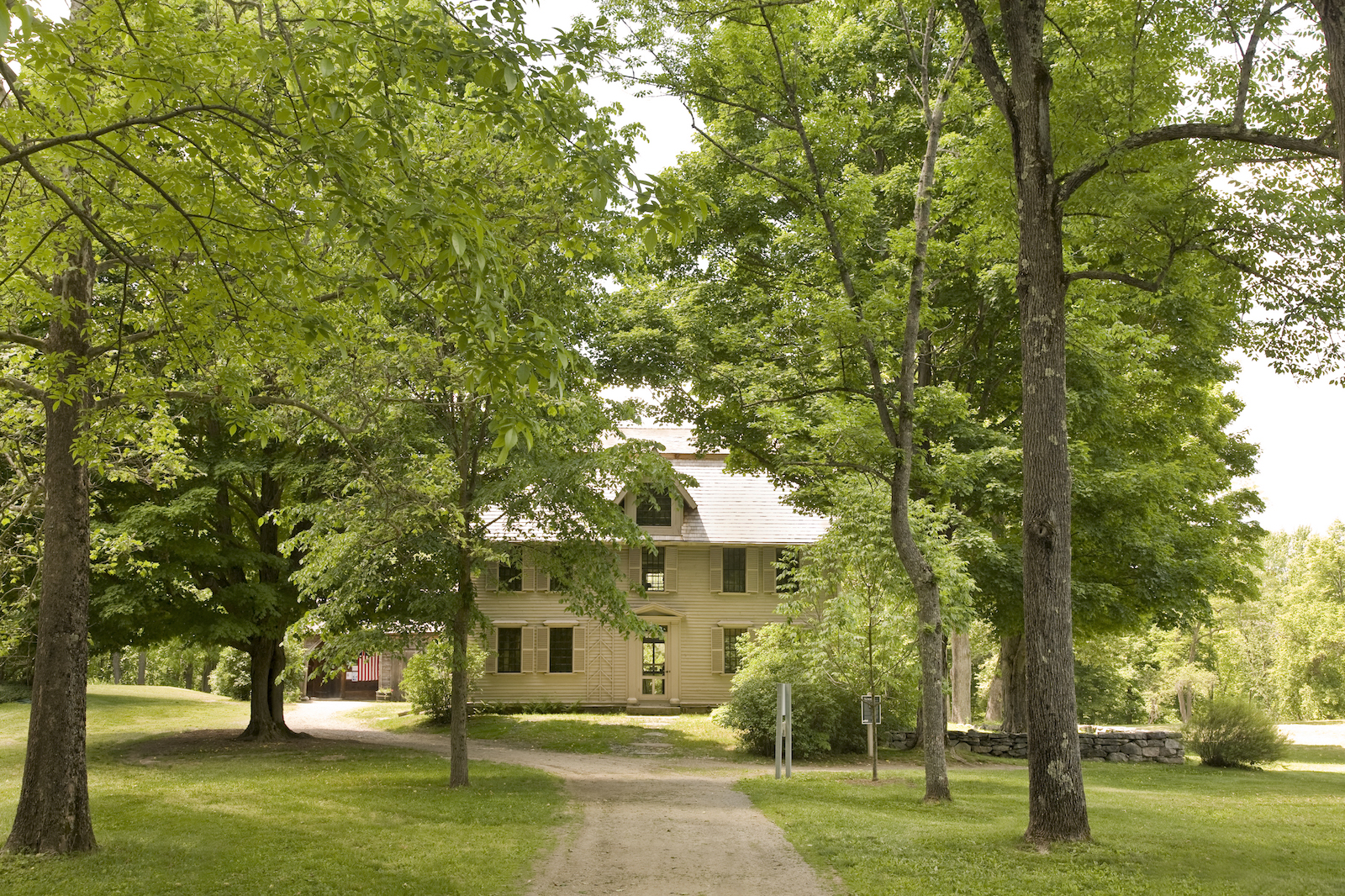
Before winning her landmark freedom suit, she was enslaved by Colonel John Ashley, the largest enslaver in Sheffield and possibly all of Berkshire County. Ashley held at least eight people in bondage: Elizabeth (then known as Bett), her daughter Betsey, Brom, Caesar, Harry, John Sheldon, Adam Mullen, and Zach Mullen. At least twenty-eight people were enslaved by the extended Ashley family.
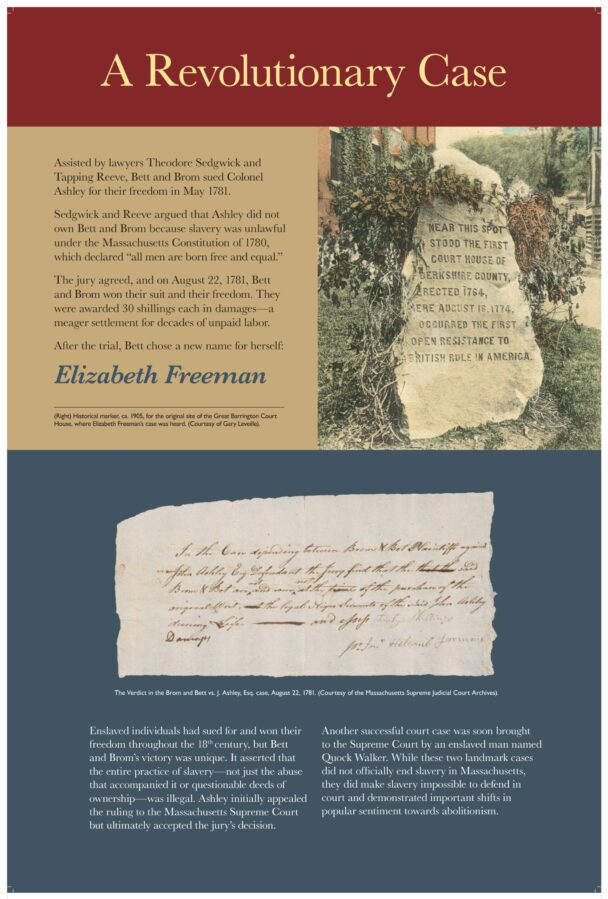
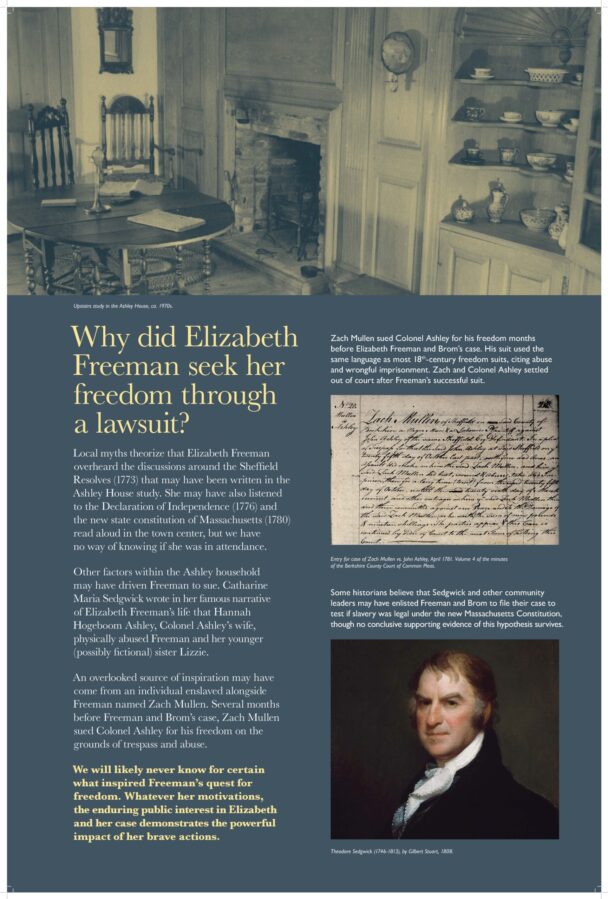
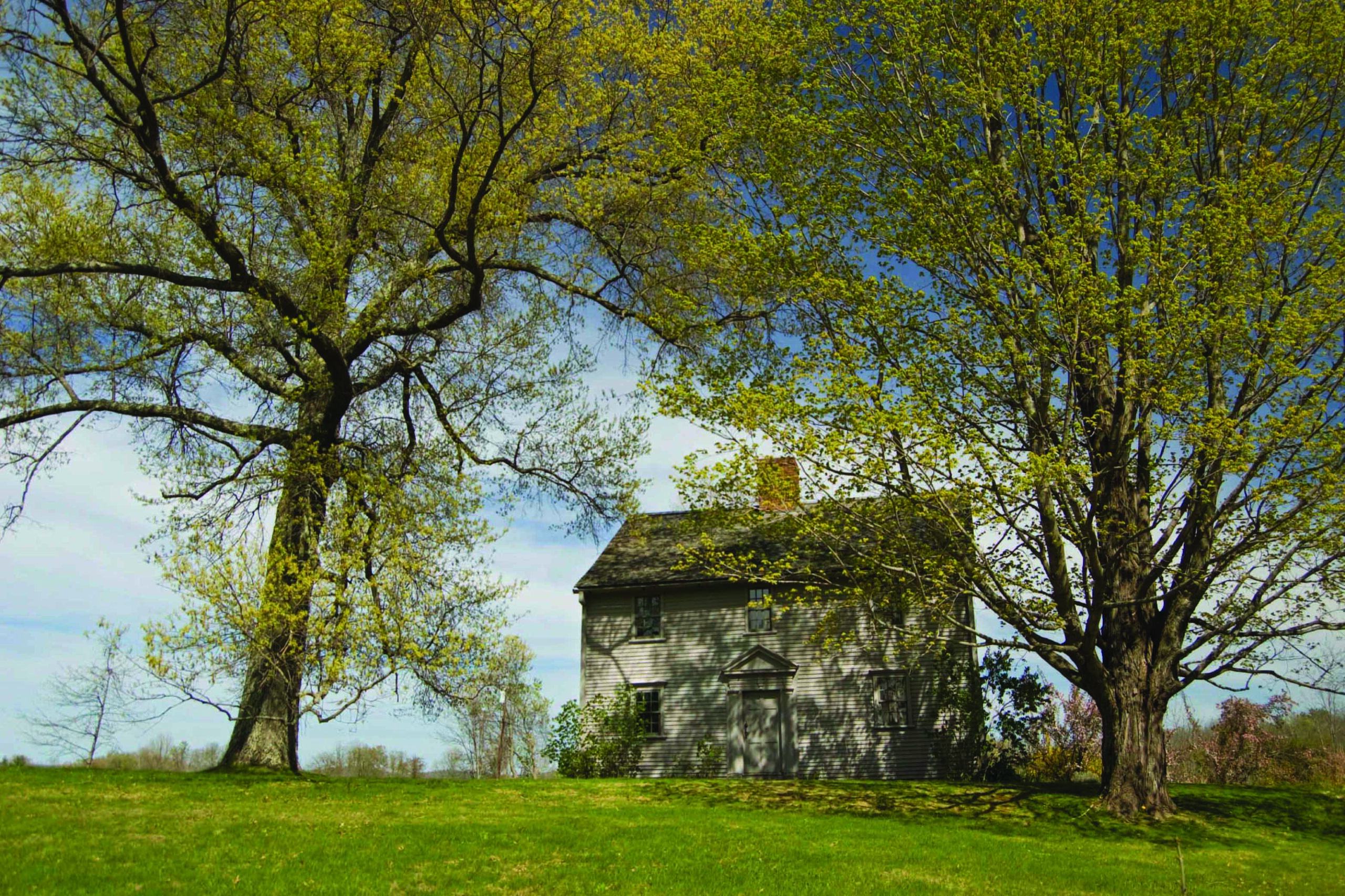
In 1781, Bett and Brom sued Colonel Ashley for their freedom (Zach had filed a suit months earlier). Why Bett sued is not known. She could not read or write and left no account of her own. Local lore holds that she overheard discussion of the Sheffield Resolves, which may have been drafted in the Ashley House study in 1773.
Lawyers Theodore Sedgwick and Tapping Reeve argued that slavery was unlawful under the new state constitution. The jury agreed. On August 22, 1781, Bett and Brom won their freedom and thirty shillings each — a meager settlement for decades of unpaid labor. Bett chose a new name for herself: Elizabeth Freeman.
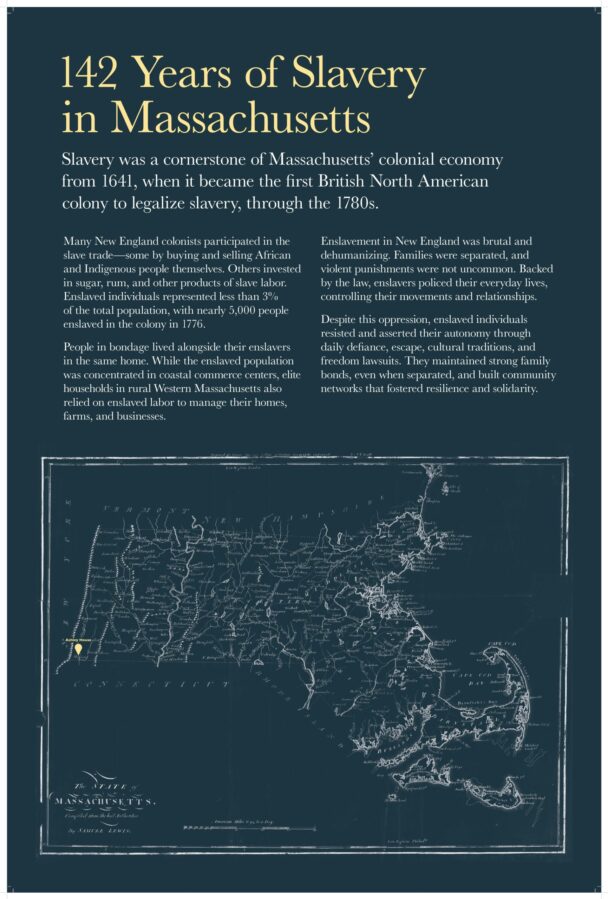
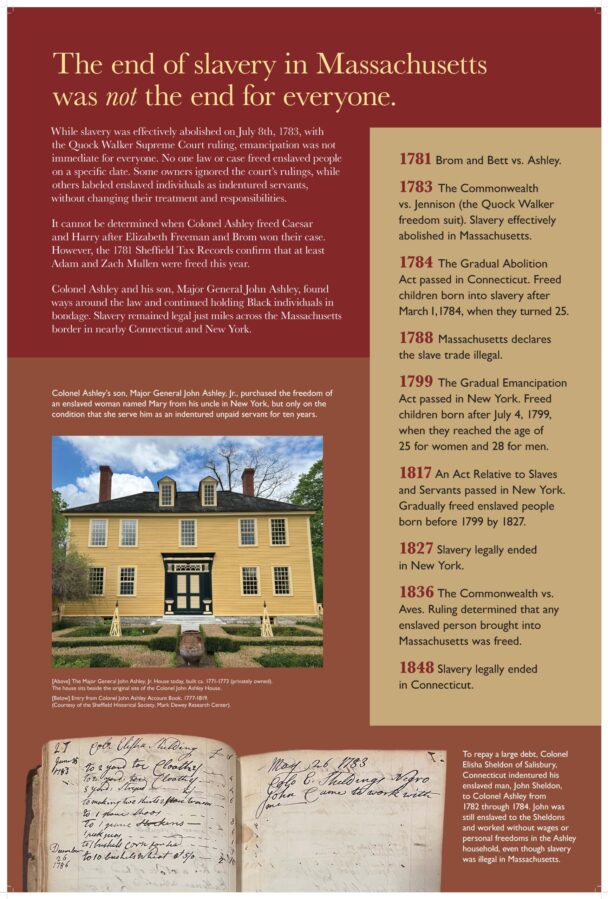
Their case did not abolish slavery. Massachusetts never passed an abolition law and no single ruling freed enslaved people on a specific date. This case, along with the Quock Walker suits, did make slavery impossible to defend in court and suggested a shift in popular sentiment toward abolition. By 1790, no enslaved people were recorded in the state census.
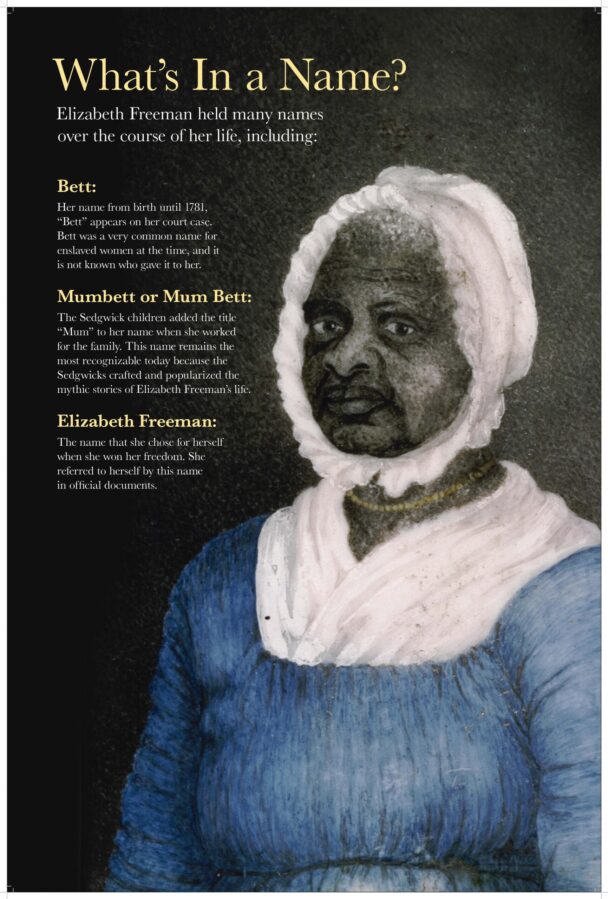
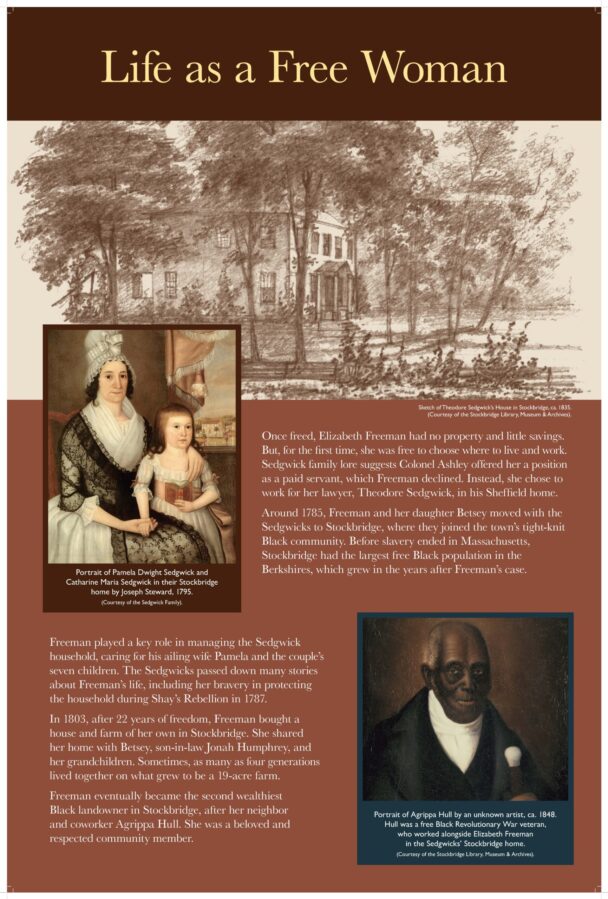
As a free woman, Elizabeth earned wages working for Sedgwick, whose children called her Mumbet. In 1803, she bought her own house and farm in Stockbridge where four generations of her family lived on 19 acres. Known as a skilled midwife and healer, she was the second wealthiest Black landowner in town.
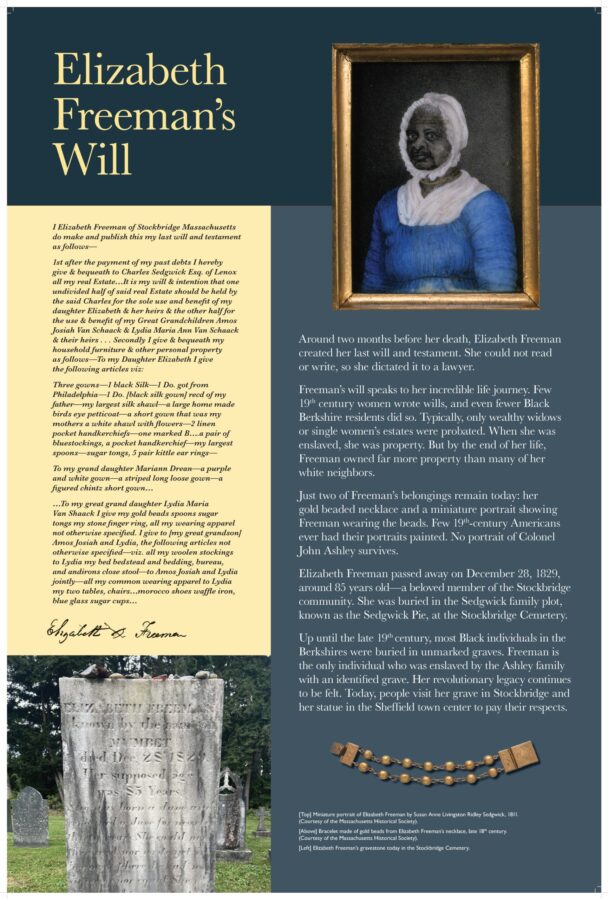
Before her death in 1829, Elizabeth dictated a will. Among the bequests to her daughter: a gown “received of my father” and “a short gown that was my mothers.” She had carried these heirlooms through decades of enslavement to leave to Betsey. Two of her belongings survive: a gold beaded necklace and a miniature portrait of her wearing it.
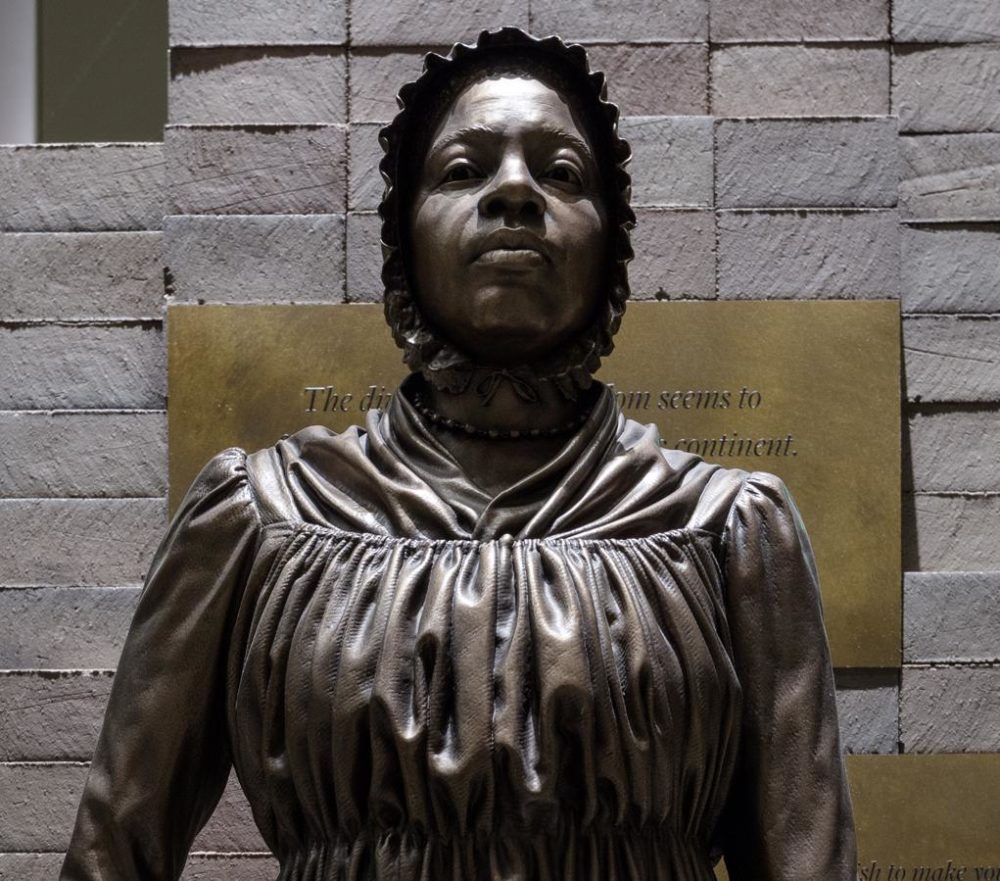
Elizabeth’s story endured through the centuries and continues to inspire today.