Redemption Rock
Find Your Place

About Redemption Rock

1/4 acre

A modest-sized reservation with a momentous history, it was here in April of 1676 that King Philip’s War hostage Mary White Rowlandson was released from Indian captivity.

What makes Redemption Rock a special place?
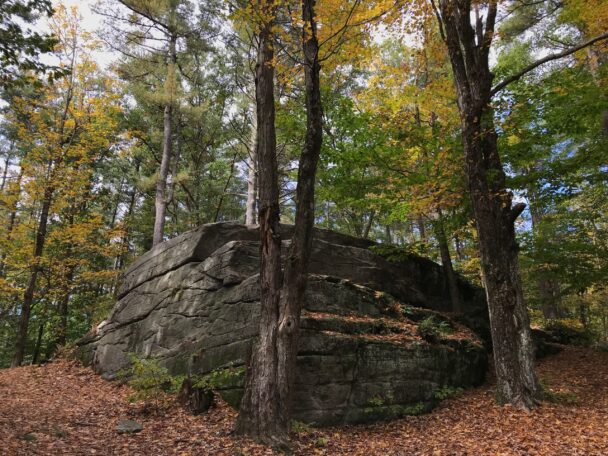
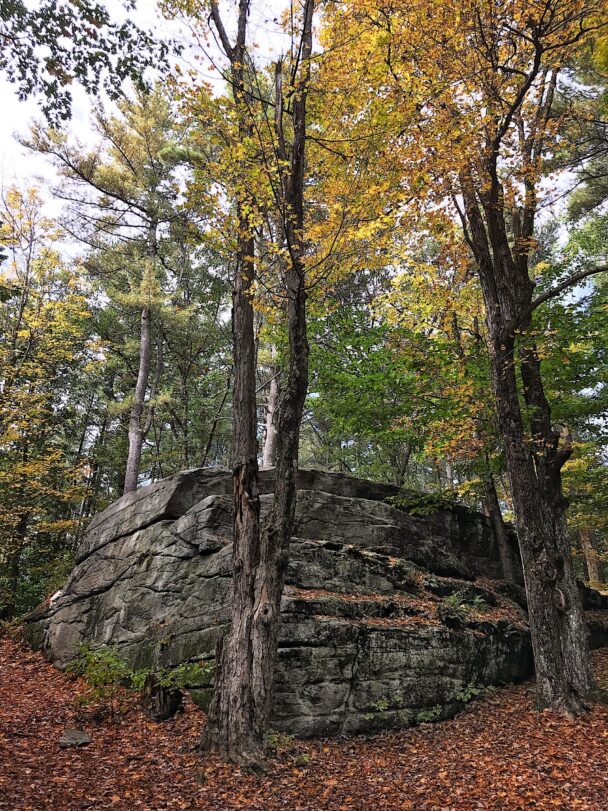
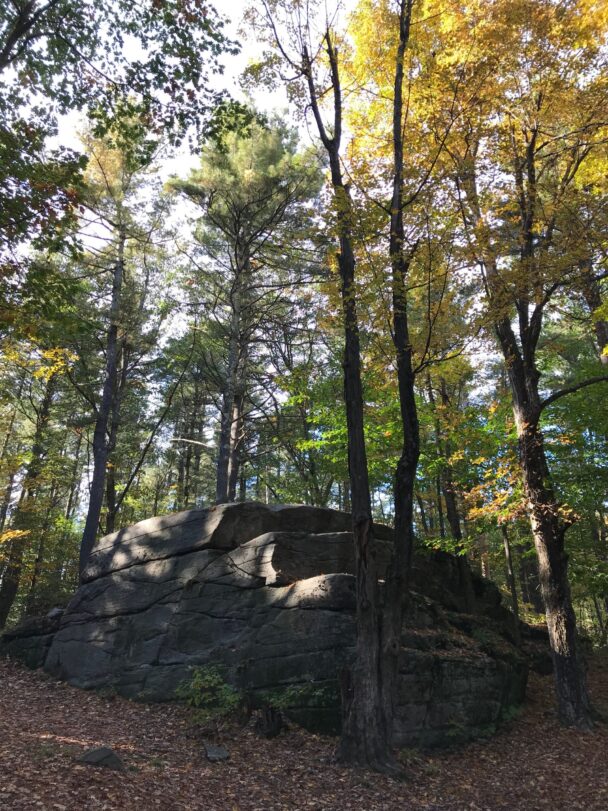
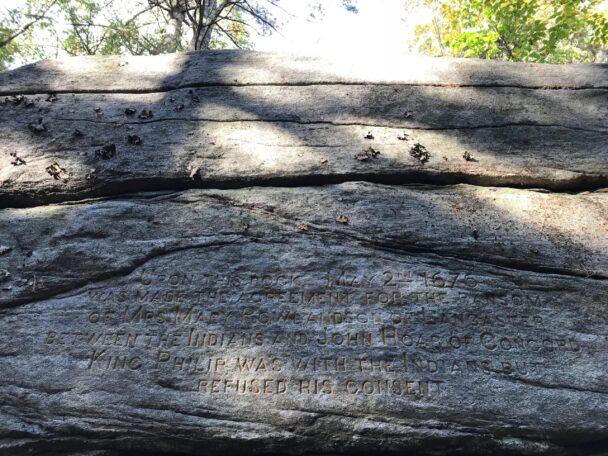
While the reservation is only one-quarter acre in size, it boasts a significant history. The granite ledge is inscribed with the plot of the colonial hostage negotiation and release from captivity of Mary White Rowlandson.

The Short Story
Angered by the spread of colonial settlements westward, the chief King Philip (Metacomet) led the Nipmuc, Narragansett, and Wampanoag in defense of their land. In February 1676, several hundred Native Americans attacked Lancaster and captured Mary White Rowlandson, her three children, and twenty others and took them into the wilderness for several months. They returned to Lancaster in late April of 1676, where, as the inscription says, John Hoar of Concord negotiated Mary’s release at this huge, flat-topped granite ledge.

The Long Story
Mary White Rowlandson (1637-1711) told her own story in “The Narrative of the Captivity and Restoration of Mrs. Mary Rowlandson,” which first appeared in public in 1679, three years after her capture and release. It would become a 17th-century bestseller on both sides of the Atlantic with 15 editions published before 1800. According to Neal Salisbury, who re-published Mary's narrative in 1997 as “The Sovereignty and Goodness of God,” in 1653, Lancaster was a frontier town in the “wild, wild west” of Massachusetts. The Rock southeast of Wachusett Lake was a point of contact between two civilizations.
Many of New England’s Native American tribes, angered by the spread of colonial settlements, the conversion of forests into farmland, and perceived injustices at the hands of colonists, joined the Wampanoag sachem Metacom (called Philip by the English) in an attempt to drive the colonists from their new homelands, in the process destroying hunting grounds, winter camps, and settlements. Mary White Rowlandson’s narrative begins on February 10, 1676, when 400 Nipmucs, Narragansetts, and Wampanoags attacked Lancaster “about sun-rising.” Mary, her three children, and 20 other captives were taken into “the vast and desolate wilderness, I knew not whither.” After many “removes” (shifts of locations), they ultimately rendezvoused with King Philip near the present day New Hampshire-Vermont border north of Northfield, MA. Her bible was a source of comfort throughout, and her sewing skills, quickly discovered, placed her in good favor; for a shilling, she was asked to make a shirt for King Philip.

Mary and her captors returned by late April 1676. John Hoar of Concord, who had instructed and protected a group of “praying Indians,” went to negotiate her release at the flat-topped outcrop overlooking a meadow where the Native Americans had camped. She writes, “Philip who was in the company came up and took me by the hand and said, ‘Two weeks more and you shall be Mistress again.’” Later, a ransom was raised “by some Boston gentlemen.” She traveled to Boston with John Hoar to be reunited with her husband, son, and eldest daughter (the youngest had died from wounds eight days after the raid).

Trails
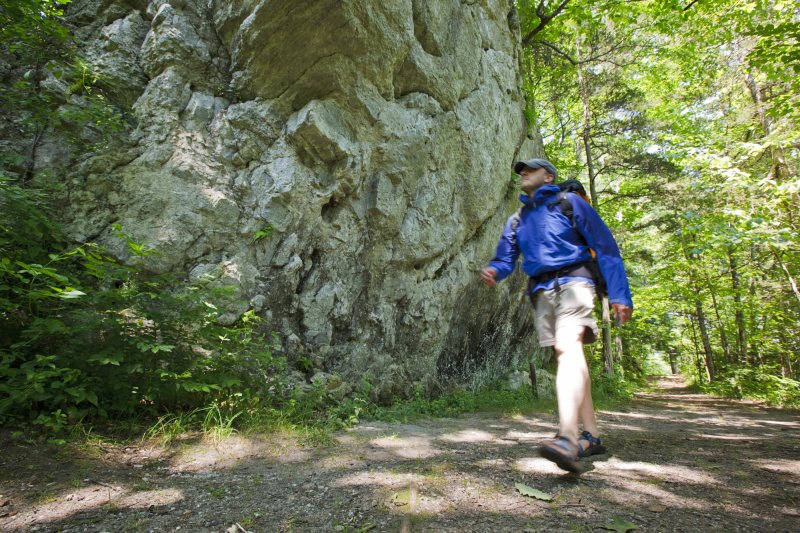
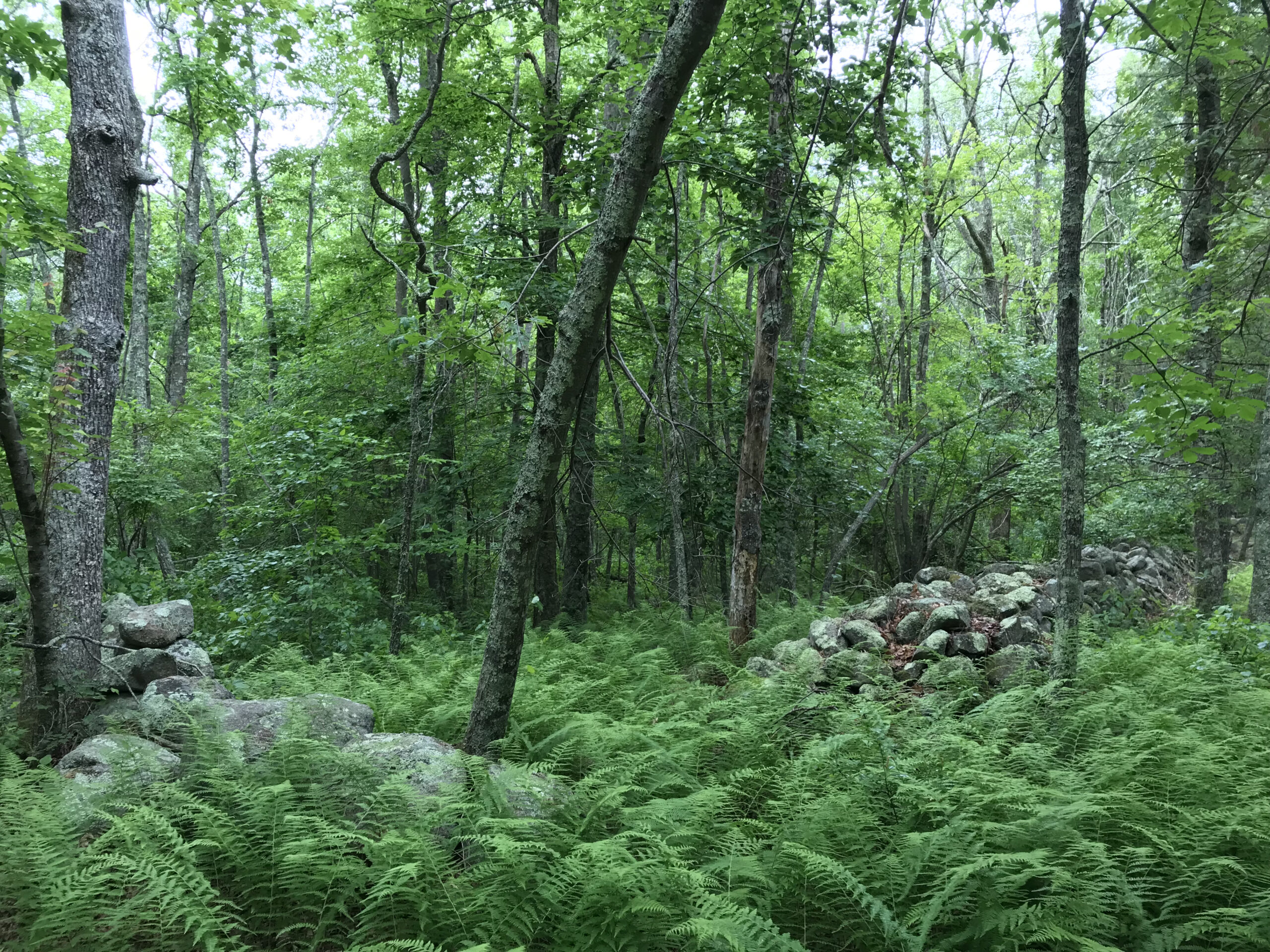
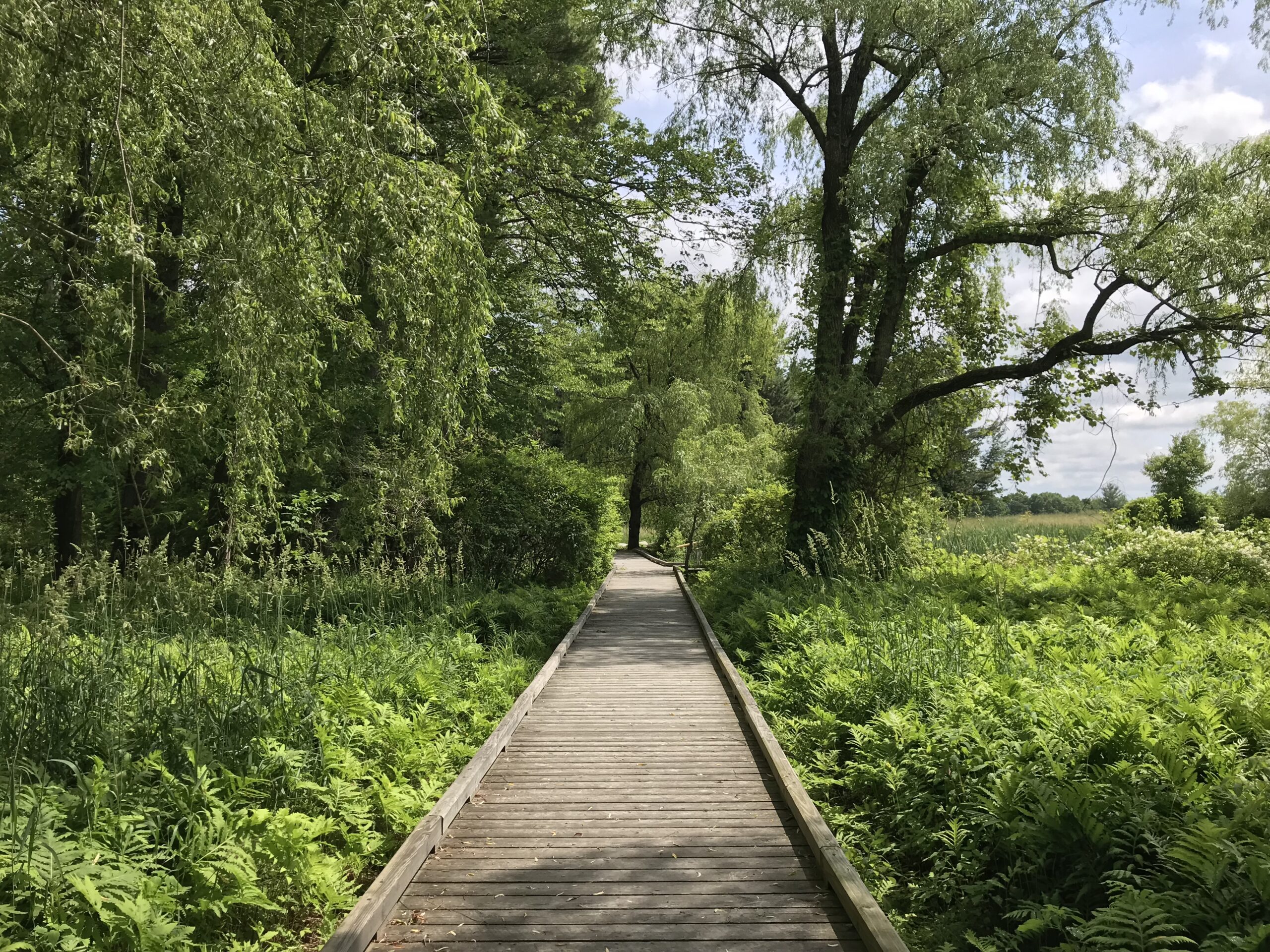
While the reservation is only one-quarter acre in size, it is surrounded by watershed lands owned by the City of Fitchburg and is a link in the 92-mile Mid-State Trail.

When to Visit
Year-round, daily, sunrise to sunset.

Regulations & Advisories

No advisories at this time.

Directions

Route 140
Princeton, MA
Telephone: 978.840.4446
Email: central@ttor.org

Get directions on Google Maps.

From intersection of Rts. 2 and 140 in Westminster, take Rt. 140 South for 3 mi. to the entrance and parking (3 cars) on right. From intersection of Rt. 140 and 31 in Princeton, take Rt. 140 north 0.9 mi. to entrance on left.

Admission

When to Visit
Year-round, daily, sunrise to sunset.

Admission
FREE to all

Property History

This historic site was acquired in 1889 by Senator George F. Hoar, one of the founders and first president of The Trustees. It was donated to The Trustees by the Senator’s descendants, John Hoar and John Hoar, Jr.

Property Acquisition History
Gift of John Hoar and John Hoar, Jr., in 1953.

Volunteer Opportunities

There are no volunteer positions at this reservation at this time; please check again later or click here to find other opportunities near you.

Work Parties

There are no work parties at this reservation at this time; please check again later or click here to find other work parties near you.

Maps and Resources

At present, a downloadable map is not available for Redemption Rock.

Planning Your Visit

Before You Go
We encourage you to visit as many Trustees properties as you can.

Wherever your travels take you, please observe all posted regulations, follow special instructions from property staff, and keep in mind the Stewardship Code:

  • Protect wildlife and plants.
  • Guard against all risk of fire.
  • Help keep air and water clean.
  • Carry out what you carry in.
  • Use marked footpaths and bridle paths.
  • Leave livestock, crops, and machinery alone.
  • Respect the privacy of neighboring land.
  • Enjoy and share the landscape with others.

Click on links below for further visitor information:

Before Setting Out

Enjoying Trustees Reservations

Safety

About Hunting on Trustees of Reservations Land

Tell Us What You Think

Submitted by Peg on: September 26, 2009
I read about Redemption Rock in Nathaniel Philbrick's MAYFLOWER. Someday I hope to visit this site.


Nickname
Comment
Enter this word:

Announcements & Alerts

No advisories at this time.

Upcoming Things To Do
No events for this reservation at this time.
Other Trustees Properties You Might Like:

Dexter Drumlin
Lancaster, MA

Doyle Reservation
Leominster, MA