Trustees is historically a dog-friendly conservation organization that balances public use and enjoyment with natural and cultural resource protection, and dog-walkers are among our most frequent visitors. At the same time, people and dogs pose a significant environmental burden on natural resources. In order to ensure habitat and resource protection, Trustees has undergone a detailed, multi-year assessment of the impact of increased visitation by people and dogs and, as a result, has established the following new guidelines and procedures for dog walkers.
If you have specific questions about the dog walking policy for a specific property, please search for that property and click on the ‘Regulations and Advisories’ tab which will give more detail around their dog walking policy.
Reservations that allow Off-Leash Dog Walking
Please note specific restrictions listed after the reservation name. Also please note: Some of these properties may require temporary on-leash rules during grassland bird nesting periods.
Appleton Farms Grass Rides, Hamilton
Charles River Peninsula, Needham
Cormer Woods, Mendon & Uxbridge
Crane Beach, Ipswich (off-leash allowed in marked zones only, from Oct 1 – Mar 31)
Notchview, Windsor (off-leash property-wide during non-ski season, and only south of Rte. 9 during ski season)
Old Town Hill, Newbury (limited areas, from Aug 16 – Mar 31; please avoid highly sensitive salt marsh and grassland habitats)
Ravenswood Park, Gloucester
Rocky Narrows, Sherborn
Rocky Woods, Medfield (zoned; off-leash allowed, except on Red Trail around Chickering Pond)
Shattuck Reservation, Medfield
Whitney & Thayer Woods, Cohasset & Hingham (off-leash west of Intersections 7 & 20; seasonal on-leash for Turkey Hill)
Areas excluded from Off-Leash designation:
- Resource Protection Areas
- Grassland Nesting Habitat (Apr. 1 – Aug. 15)
- Campgrounds/Inns
- Open Public Water Supply
- Entrance/Parking
- Parks, Estates, & Sensitive Historic/Cultural Sites
Resource Protection Areas: No Dogs
No dogs are allowed in Resource Protection Areas. These areas are defined by a specific resource concern or visitor safety concern and cannot tolerate the presence and proximity of dogs or their waste. Properties and trails designated as Resource Protection Areas are
Working farms and gardens—including crop fields, food gardens, food production, processing, and sale facilities
Coastal dune habitats, including shorebird nesting areas and sensitive migratory habitats
Designated Children’s Play Areas
Historic/cultural buildings and museums
Highly sensitive horticultural resources and National Natural Landmarks
Guidelines for Dog Walkers
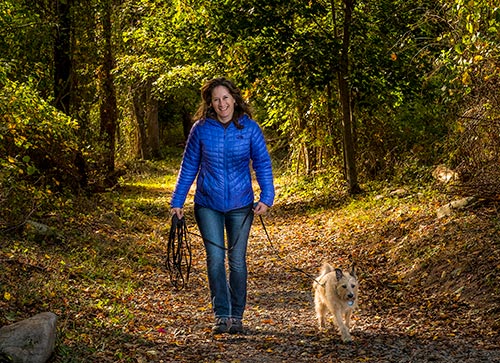
Dog walking is a wonderful way to enjoy our properties; but, as dogs can adversely impact the ecology, Trustees’ conservation efforts, and the experience of other visitors, we expect that all dog walkers will follow responsible, common-sense dog-walking manners, as outlined below.
Be a Mindful Dog WalkerVisits to our properties should be enjoyable for all—whether walking dogs or not, or whether you are a “dog person” or not. The Trustees expects that all dog walkers will adhere to the following guidelines, and encourages our Members to set the example of what it means to be a mindful dog walker:
Recognize that others might not be comfortable with being approached by or having physical contact with your dog. Ask first!
Respect our organization’s conservation efforts.Please do not allow your dog to chase or harass animals and wildlife, or to disturb or destroy vegetation. Ecologically sensitive areas are generally marked by signage, but care should be taken in all areas.
Remove dog poopIt’s bad for the environment and wildlife, and it makes for an unpleasant experience for other visitors. Please bag it and carry it out! Bring and use dog waste bags; dispose in designated receptacles, if available, or take it with you.
Where Can I Walk My Dog?
All Trustees trails fall within one of the following three designations for dog walking:
Dogs must be leashedThe majority of Trustees’ trails or trail systems require dogs to be on-leash to accommodate the experiences of a diversity of recreational trail uses and for ecological protection. Having dogs on-leash limits the chances of unwanted interactions among other recreational uses and with wildlife.
Dog Walking Trails: The only trails where dogs are allowed off-leash
In places where there is minimal impact to sensitive resources or concerns for the experiences of other trail users, The Trustees will designate Dog Walking Trails, in order to provide locations for visitors seeking an off-leash dog walking experience. Off-leash dog walkers should adhere to our guidelines outlined in Be a Mindful Dog Walker (above) or use a leash if they cannot. While off-leash dog walking is a popular recreational activity, it is difficult to provide off-leash access on conservation lands in Massachusetts, for a variety of reasons.
Resource Protection Areas: No DogsNo dogs are allowed in Resource Protection Areas.
All properties and trails that allow dog walking (on-leash or off-leash) have posted signage at all trailheads.
Policy Guidelines
The Trustees dog policy seeks to achieve excellent visitor experience and access, compatible with resource conservation and protection by
- establishing responsible, common-sense and mindful dog walking manners
- requiring dogs to be leashed on all “Multi-Use Trails”
- allowing an off-leash experience on Primary Use Trails for dog walking
- restricting dog access on trails and properties with specific resource protection concerns
Multi-Use Trails: On-Leash Dog Walking
The majority of trails or trail systems require dogs to be on-leash to accommodate the experiences of a diversity of recreational trail uses. Having dogs on-leash limits the chances of unwanted interactions among other recreational users. To be sensitive to the experiences of all other users, dogs are required to be on-leash.
Primary Use Trails: Off-Leash Dog Walking
Off-leash dog walking is a popular recreational activity, that is increasingly more difficult to provide on conservation lands in Massachusetts. With an understanding that off-leash dog walking can negatively impact sensitive resources and the experience of other visitors; properties where we allow for off-leash dog walking will be actively managed and monitored.
Service Animals
The Trustees follows state and federal regulations regarding Service Animals and Public Accommodations. State regulations are covered under General Laws Part IV, Title I, Chapter 272, Section 98A and are administered by the Massachusetts Office on Disability. Federal laws are enforced by the Department of Justice under the Americans with Disabilities Act (ADA).
In summary, any places that are open to the public shall permit service animals to accompany people with disabilities anywhere members of the public are allowed to go. Service animals are not required to be certified, wear a vest or badge, demonstrate the service provided, and the owner may not be asked to provide documentation of disability. Emotional support, therapy, comfort, and companion animals are terms used to describe animals that provide comfort just by being with a person. Because they have not been trained to perform a specific job or task, they do not qualify as service animals under the ADA.
The ADA requires that service animals be under control of the handler at all times. The service animal must be harnessed, leashed, or tethered while in public places unless these devices interfere with the service animal’s work or the person’s disability prevents use of these devices. In that case, the person must use voice, signal, or other effective means to maintain control of the animal. If a service animal is out of control and the handler does not take effective action to control it, staff may request that the animal be removed from the premises.